
New "Zone 0" Wildfire Safety Rules: What Homeowners Need to Know (updated 11/9/26)
SVFD_Zone_0_Property_Owner_Guide_November_2026.pdf
November 5, 2026 Revised Zone 0 Regulations
Board of Forestry Zone 0 Updates and Resources
Office of Administrative Law Emergency Filings and Public Comment
The short version
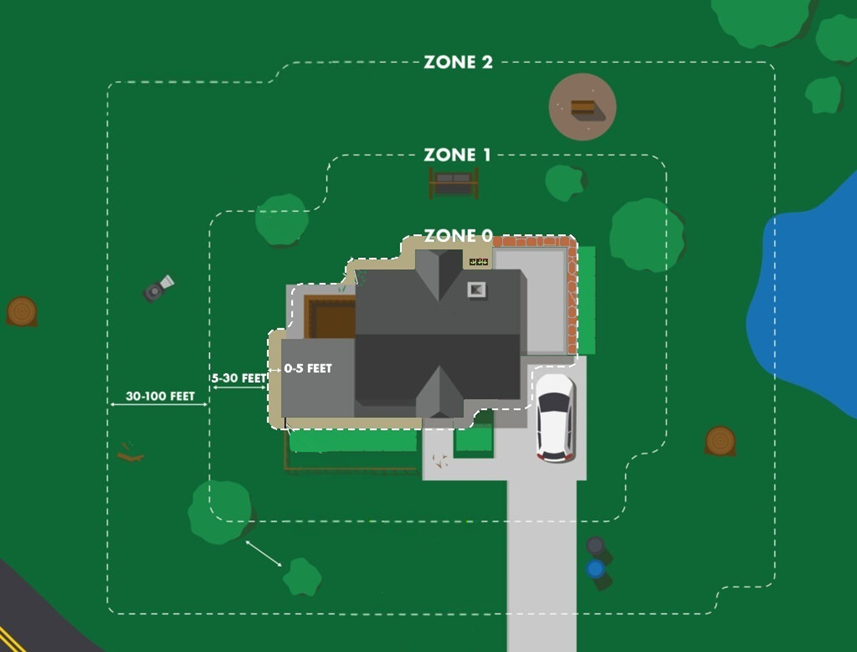
Zone 0 is the first five feet around a home or other qualifying structure. Keeping this area clear of materials that can catch fire helps reduce the chance that wind-blown embers will ignite the structure.
On November 5, 2026, the California Board of Forestry and Fire Protection adopted revised emergency Zone 0 regulations after withdrawing the August package. As of November 9, 2026, the revised regulations have yet to take effect. The Board’s public notice anticipates submission to the Office of Administrative Law on or after November 13. The five-calendar-day public comment period begins when the Office of Administrative Law posts the filing.
Under the revised regulations, new construction would comply when the regulations take effect. Existing homes and structures would follow the phased schedule below. Current state and local defensible space requirements continue to apply.
Who Would These Requirements Apply To?
The proposed Zone 0 regulations apply to properties located in:
- State Responsibility Areas (SRA); and
- Very High Fire Hazard Severity Zones (VHFHSZ) within Local Responsibility Areas (LRA).
Zone 0 does not apply to LRA properties that are not within a designated Very High Fire Hazard Severity Zone.
Much of the Sonoma Valley Fire District service area includes SRA and LRA properties within designated Very High Fire Hazard Severity Zones.
Not sure about your property? Use the State Fire Hazard Severity Zone lookup tool - CLICK HERE
Where Is Zone 0?
Measure Zone 0 horizontally from the exterior wall of the building or from the outer edge of an attached deck, stairway, or pergola. Measure out five feet, stopping sooner at the property line or another qualifying building or structure.
A self-supporting deck, stairway, or pergola within one foot of the building counts as attached for this measurement. A noncombustible patio surface does not extend Zone 0. A roofed patio cover may qualify as a structure depending on its design.
If a neighbor adds a building or an accessory dwelling unit (ADU), the addition does not require you to create additional defensible space on your property.
Buffers Free of Vegetation and Combustible Materials
Vegetation would not be allowed:
- Under eaves
- Within at least 1 foot of an exterior wall where there is no eave
- Within 2 feet of windows, doors, and vents
- Within 5 feet of attached decks, stairs, and pergolas
Where an eave extends farther than one foot from the wall, the vegetation-free area extends to the edge of the eave, up to the five-foot limit of Zone 0.
What Would Not Be Allowed in Zone 0?
When flammable vegetation conditions exist, the revised regulations would generally prohibit combustible materials in Zone 0, subject to specific exceptions. Examples include bark and wood-chip mulch, fallen leaves and needles, combustible debris, and combustible plastic or wood items.
The revised regulations would also prohibit firewood storage in Zone 0 and require the areas beneath decks, balconies, stairs, and pergolas to be clear of vegetation and combustible materials. Roofs and rain gutters would need to stay clear of leaves, needles, and other combustible debris.
The revised regulations provide a temporary exception for mulch needed to prevent erosion during construction or an emergency, as determined by a defensible space inspector. See the sections below for the specific rules on plants, fences, gates, and outbuildings.
What Vegetation Would Be Allowed?
The revised regulations would allow limited vegetation in portions of Zone 0 outside the required clear buffers. Permitted plants must be free of dead or dying material.
- Lawns and low ground covers. Non-woody plants up to three inches tall.
- Small plantings. Non-woody plants between three and 18 inches tall in plantings no larger than one square foot. Separate plantings by at least two feet, measured between the widest points of the plants.
- Potted plants. Non-woody plants up to 18 inches tall in noncombustible containers that are not fixed in place and hold no more than five gallons. Separate containers by at least two feet. Measure plant height from the base of the visible plant.
Existing trees are subject to the separate requirements below.
Trees in Zone 0
The revised regulations would prohibit planting new trees in Zone 0. Existing trees could remain if they meet the applicable maintenance and clearance requirements.
- Remove dead or dying branches.
- Keep live branches at least ten feet from chimney and stovepipe outlets.
- Keep live branches clear of the area beneath eaves. Where there is no eave, keep live branches at least one foot from the structure.
- Remove ladder fuels that can carry fire into the tree, including those in the lowest six feet or lowest one-third of the tree’s height, whichever is less.
- Keep live branches at least five feet above the roof and at least five feet from attached decks, stairs, and pergolas.
- Keep live branches at least two feet from windows, doors, and vents.
Fences and Gates
Under the revised regulations:
- A fence or gate attached directly to a structure must be made entirely of noncombustible material.
- A fence or gate that is attached to or comes within one foot of a structure must have a five-foot noncombustible span beginning at the attachment point or the point closest to the structure.
- A new fence or gate installed within five feet of a structure must be made entirely of noncombustible material.
- The fence and gate provisions exempt repairs to existing fences and gates.
See the compliance schedule below for when the different provisions would apply.
Outbuildings
A shed or similar outbuilding smaller than 120 square feet and not used for human habitation could remain within Zone 0 only if it is made entirely of noncombustible materials.
A separate building that meets the definition of a qualifying structure may have its own Zone 0 measurement.
When Would These Requirements Take Effect?
If approved, the revised emergency regulations would take effect when filed with the California Secretary of State. The schedule below describes the proposed phase-in for the revised state regulations.
New Construction
New buildings and structures would have to meet all applicable Zone 0 requirements once the regulations take effect. The revised text uses the date the initial building permit application was submitted to distinguish new construction from existing or already-underway projects.
Existing Homes and Structures
At the effective date
- Keep roofs and gutters clear of combustible debris.
- Remove dead or dying tree branches.
- Keep live tree branches at least ten feet from chimney and stovepipe outlets.
- Use entirely noncombustible materials for new fences and gates within five feet of the structure. The fence and gate provisions exempt repairs to existing fences and gates.
Three years after the effective date
- Remove firewood and other restricted combustible materials from Zone 0.
- Clear vegetation and combustible materials from beneath decks, balconies, stairs, and pergolas.
- Remove required ladder fuels and meet the remaining live-branch clearances around eaves, walls, roofs, attached decks, stairs, pergolas, windows, doors, and vents.
Three to five years after the effective date
- Meet the clear buffer requirements around vulnerable parts of the structure.
- Bring remaining vegetation into compliance with the permitted planting standards.
- Meet the attachment and clearance requirements for existing fences and gates.
In covered Local Responsibility Areas, a later deadline for this last phase would be set by local ordinance supported by a written finding. In State Responsibility Areas, the CAL FIRE Director would set the schedule. Check the filed regulations for the applicable outbuilding compliance date.
What Can You Do Now?
Property owners do not need to wait for the regulations to become effective to begin reducing wildfire risk.
You can reduce the risk of ember ignition around your home now.
- Clear leaves, needles, and debris from roofs and gutters.
- Move firewood out of the first five feet around your home.
- Remove dead or dying vegetation near the structure.
- Clear vegetation and combustible items from beneath decks, stairs, balconies, and pergolas.
- Trim tree branches away from roofs, eaves, and chimney outlets.
- Replace bark or wood-chip mulch next to your home with a noncombustible alternative such as gravel.
- Review the proposed clearances before installing new fencing or landscaping close to your home.
Questions?
Contact the Sonoma Valley Fire District Fire Prevention Bureau for help understanding how the proposed regulations may apply to your property.
Sonoma Valley Fire District
630 Second Street West
Sonoma, CA 95476
707-996-2102
This page summarizes the revised emergency regulations adopted by the California Board of Forestry and Fire Protection on November 5, 2026. Visit the Board’s Zone 0 page for current rulemaking information and defensible space resources.
