
New "Zone 0" Wildfire Safety Rules: What Homeowners Need to Know
The short version
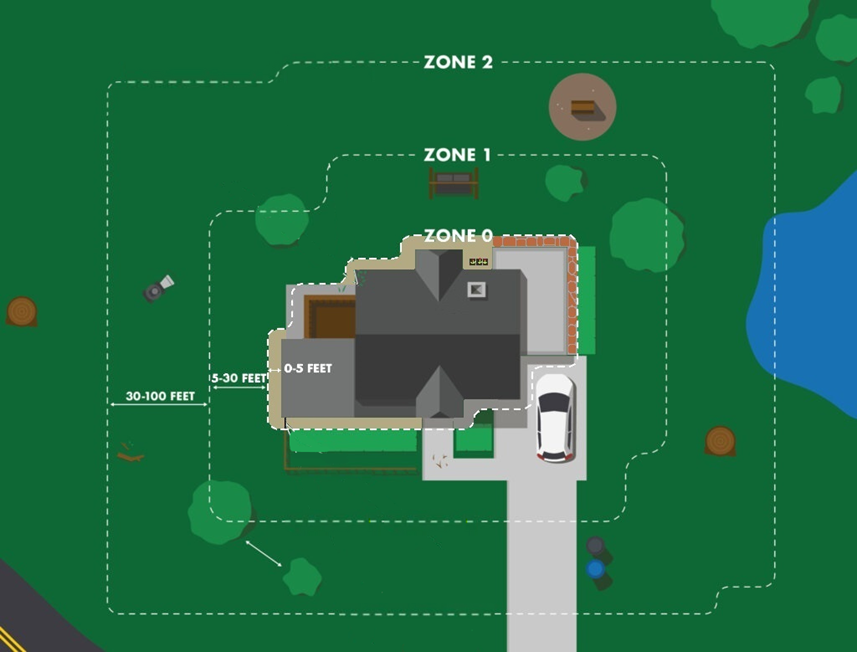
California is developing new defensible space requirements for the first five feet around homes and other structures, an area known as Zone 0 or the Ember-Resistant Zone.
On August 19, 2026, the California Board of Forestry and Fire Protection considered a deliberative draft of the Zone 0 regulations. The regulations are not yet in effect and may change before they are finalized.
Once effective, new construction will be required to meet the applicable Zone 0 standards immediately. Existing homes and structures will have a phased compliance period, with some requirements taking effect immediately and others allowing several years for compliance.
This page explains what is currently proposed, who the regulations would apply to, and steps property owners can take now to reduce wildfire risk.
Who Would These Requirements Apply To?
The proposed Zone 0 regulations apply to properties located in:
- State Responsibility Areas (SRA); and
- Very High Fire Hazard Severity Zones (VHFHSZ) within Local Responsibility Areas (LRA).
Zone 0 does not apply to LRA properties that are not within a designated Very High Fire Hazard Severity Zone.
Much of the Sonoma Valley Fire District service area includes SRA and LRA properties within designated Very High Fire Hazard Severity Zones.
Not sure about your property? Use the State Fire Hazard Severity Zone lookup tool - CLICK HERE
Where Is Zone 0?
Zone 0 is the first five feet surrounding your home or other occupied structure.
It begins at the exterior surface of the:
- Exterior wall
- Roof
- Attached deck
- Attached stairs
- Attached pergola
Zone 0 extends outward five feet, or to the property line, whichever comes first.
Within Zone 0, the proposed regulations provide additional protection for areas of a structure that are especially vulnerable to wildfire and ember exposure.
Areas Where Vegetation Is Not Allowed
Vegetation would not be allowed:
- Under eaves
- Within at least 1 foot of an exterior wall where there is no eave
- Within 2 feet of windows, doors, and vents
- Within 5 feet of attached decks, stairs, and pergolas
Where an eave extends farther than one foot from the wall, the vegetation-free area extends to the edge of the eave, up to the five-foot limit of Zone 0.
What Would Not Be Allowed in Zone 0?
Except for the limited vegetation specifically permitted by the regulations, combustible materials would not be allowed within Zone 0.
Examples include:
- Bark, wood chips, and other combustible mulch
- Fallen leaves, needles, and combustible debris
- Firewood
- Combustible items stored beneath decks, balconies, stairs, or pergolas
- Dead or dying vegetation
- New combustible fences or gates within five feet of the structure
- Combustible outbuildings within Zone 0
Roofs and rain gutters must also be kept clear of leaves, needles, and other combustible debris.
What Vegetation Would Be Allowed?
Limited vegetation would be permitted in portions of Zone 0 that are outside the required vegetation-free areas.
Allowed vegetation must be well maintained, non-woody, and free of dead or dying material.
Examples include:
- Lawns and low ground covers under 3 inches tall
- Non-woody plants between 3 and 18 inches tall, when planted in areas no larger than 1 square foot and properly spaced
- Potted plants up to 18 inches tall in unaffixed, noncombustible containers no larger than 5 gallons and properly spaced
Plant spacing is based on the height of the tallest plant, with required separation equal to at least 1.5 times the plant's height.
Trees in Zone 0
Trees may remain within Zone 0, but they must be properly maintained to reduce the potential for fire to spread to the structure.
- Remove all dead or dying branches.
- Keep live branches at least 10 feet from chimneys and stovepipe outlets.
- Do not allow live branches beneath eaves.
- Remove ladder fuels within the lower 6 feet of the tree, or the lower one-third of the tree's height, whichever is less.
- Remove ladder fuels within 5 feet above a roof when they create a high risk of fire transmission.
- Keep live branches at least 5 feet above the roof.
- Where applicable under the LRA requirements, keep live branches at least 1 foot from exterior walls where there is no eave.
Fences and Gates
The proposed rules also address combustible fences and gates near structures.
- Combustible fences and gates may not be attached directly to a structure.
- A fence or gate attached to, or coming within 1 foot of, the structure must have a 5-foot noncombustible section beginning at the point of attachment or the point closest to the structure.
- Once the regulations become effective, new combustible fences or gates may not be installed within 5 feet of a structure.
- Repairs to an existing combustible fence may continue to use combustible replacement materials.
Outbuildings
Sheds and similar outbuildings smaller than 120 square feet and not used for human habitation may not be located within Zone 0 unless they are constructed entirely of noncombustible materials.
When Would These Requirements Take Effect?
The proposed Zone 0 regulations are not currently in effect.
The August 19, 2026 version remains part of the state's rulemaking process. Requirements and effective dates may change before the regulations are finalized.
Under the current draft, once the regulations become effective:
New Construction
New structures would be required to comply with all applicable Zone 0 requirements immediately upon the effective date.
Existing Homes and Structures
Existing structures would have a phased compliance schedule.
Immediately upon the effective date:
- Keep roofs and gutters clear of combustible debris
- Remove firewood from Zone 0
- Remove dead or dying tree branches
- Keep live branches at least 10 feet from chimneys and stovepipe outlets
- Keep live branches from extending beneath eaves
Within 3 years:
- Remove combustible materials from Zone 0
- Keep areas beneath decks, balconies, stairs, and pergolas free of vegetation and combustible items
- Remove required ladder fuels
- Meet applicable tree clearance requirements above roofs and near walls
Within approximately 3 to 5 years:
- Meet vegetation-free buffer requirements around vulnerable portions of the structure
- Bring vegetation within Zone 0 into compliance with the permitted planting standards
- Meet applicable fence and gate requirements
- Meet applicable outbuilding requirements
For properties in the Local Responsibility Area, the local fire protection agency may establish the final compliance timeline for this last group of requirements within the time allowed by the state regulation.
Properties in the State Responsibility Area are subject to a similar phased schedule under the SRA regulations.
What Can You Do Now?
Property owners do not need to wait for the regulations to become effective to begin reducing wildfire risk.
Some simple steps you can take now include:
- Clear leaves, needles, and debris from roofs and gutters
- Move firewood out of the first five feet around your home
- Remove dead or dying vegetation near the structure
- Remove combustible debris from beneath decks and stairs
- Trim tree branches away from roofs, eaves, and chimneys
- Consider replacing combustible mulch immediately adjacent to the home with a noncombustible alternative
- Avoid installing new combustible fencing or landscaping that may need to be changed when the regulations become effective
Questions?
Sonoma Valley Fire District's Fire Prevention Bureau is here to help you understand how these changes may affect your property.
Sonoma Valley Fire District 630 Second Street West, Sonoma, CA 95476 707-996-2102
This page will be updated as the state finalizes these regulations. Requirements described here are based on the version approved by the Board of Forestry and Fire Protection on August 19, 2026, and may change before becoming official.
